
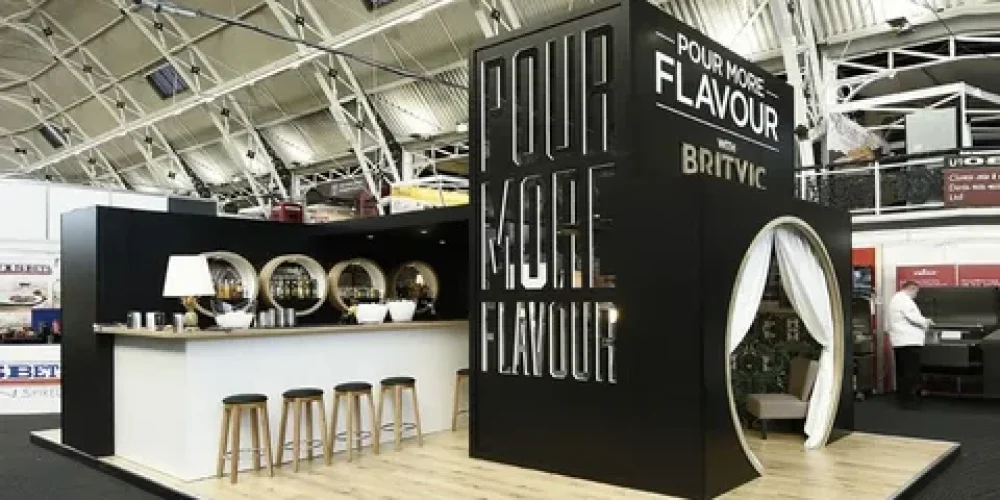
The right choice between a custom and modular exhibition stand depends on what the stand needs to achieve, how often the components will be reused, how much design flexibility the exhibition requires, and what technical features must be integrated. A modular stand suits exhibitors who value adaptability, efficient reconfiguration and repeat use. A custom stand makes more sense when the brand requires a distinctive environment, complex visitor flow, integrated technology or a highly specific layout.
The decision should happen before the design reaches fabrication. Live Events approaches this choice by assessing the exhibition objective, floor plan, brand requirements, technology, storage, meeting areas and future reuse rather than selecting a stand type based only on appearance. This matters in Dubai’s busy exhibition environment, where Dubai World Trade Centre hosted 401 events across its venues in 2025, representing 6% year-on-year growth.
Understand the Difference Before Choosing
A modular stand uses standardised or reusable components that can be configured for different exhibition spaces. A custom stand is developed around a specific brief and can incorporate bespoke structures, finishes, branding features and technology.
UFI’s exhibition education material identifies flexibility, transport and storage as key advantages of system-based stands, while conventional booth construction provides greater freedom for individual designs.
| Decision factor | Modular stand | Custom exhibition stand |
|---|---|---|
| Design flexibility | Uses adaptable components within defined configurations | Allows highly tailored layouts and architectural features |
| Reusability | Strong option for repeated exhibitions | Reuse depends on how the original structure is designed |
| Brand differentiation | Usually relies on graphics, layout and selected features | Allows greater control over shape, materials and visual identity |
| Installation | Generally simpler component-based assembly | Requires more detailed fabrication and installation planning |
| Layout changes | Components can often be rearranged | Changes may require redesign or new fabrication |
| Technology integration | Suitable for standard displays and selected AV elements | Easier to integrate complex technology into the structure |
| Storage | Components can be designed for repeated storage and transport | Bespoke elements may require more careful storage planning |
| Best suited to | Repeat exhibitions and adaptable requirements | Highly specific brand, product or visitor-experience requirements |
Choose Based on Your Exhibition Objective
The first question should not be “Which stand looks better?” It should be “What must visitors do when they enter the stand?”
A company focused on product demonstrations may need open display zones and technology integration. A business expecting private meetings may need enclosed rooms, acoustic separation and storage. A company attending several exhibitions with different floor plans may place greater value on reusable components.
The stand type should follow that functional requirement.
Modular works well when flexibility matters
Modular exhibition stands can be particularly useful when the same brand attends multiple shows. Components can be configured around different footprints, graphics can be replaced, and selected elements can be adapted without rebuilding the entire environment.
This approach also simplifies planning when the exhibition strategy changes from one event to another.
Bonus tip: Before selecting a modular system, request a layout showing how the components can work across at least two different stand footprints. A system that only works in one configuration may not provide the flexibility expected from a reusable solution.
Custom works well when the environment is part of the experience
Custom exhibition stands provide greater control over the physical environment. Curved walls, suspended features, integrated LED displays, product demonstration areas, private meeting rooms and specialised finishes can be incorporated into the design from the beginning.
Custom construction becomes more relevant when the stand itself needs to communicate a particular brand concept or guide visitors through a specific journey.
Match the Stand Type to the Technical Requirements
Technology should be considered during stand selection rather than added after the structure has been designed.
| Requirement | Modular approach | Custom approach |
|---|---|---|
| Standard TV display | Suitable | Suitable |
| Product demonstration screen | Suitable with planned mounting | Easily integrated into bespoke structures |
| Large LED wall | Requires suitable structural planning | Can be incorporated into the overall architecture |
| Interactive touchscreen | Suitable with appropriate support | Can be designed directly into counters or walls |
| Suspended branding | Subject to venue and rigging requirements | Can be planned as part of the architectural concept |
| Integrated lighting | Suitable for defined systems | Greater freedom for architectural and feature lighting |
| Private meeting rooms | Possible within larger configurations | Easier to design around specific capacity and privacy needs |
| Product storage | Can be incorporated through modular counters or rooms | Can be built around exact product and operational requirements |
Dubai World Trade Centre states that stand utilities can include power sockets, distribution boards, ceiling cables, water, waste and compressed air, making early coordination important when technology or equipment is part of the stand.
Consider the Venue Before Finalizing the Design
The exhibition venue can influence what is practical. Stand height, access, utilities, rigging, structural requirements and submission procedures should be checked before the design is approved.
At DWTC, primary rigging is managed through its designated provider, with certified teams and approved rigging hardware used for safety. This means a hanging sign, lighting grid or overhead structure cannot simply be added during installation without considering venue requirements.
The same principle applies to electrical and technical services. DWTC recommends consulting the stand contractor early about utility requirements so services can support the stand during build-up, the exhibition and tear-down.
Dubai Conditions Add Practical Considerations
Dubai’s climate also affects logistics during transportation and installation. Materials and electronic equipment can move between outdoor loading areas, vehicles and air-conditioned exhibition halls during the build period.
Sensitive screens, lighting equipment and graphics should be transported and stored with suitable protection. Installation teams should also allow enough time for technology to acclimatise, connect and undergo testing before the exhibition opens.
Bonus tip: Do not leave screen testing until the final minutes of build-up. Test displays, media players, lighting controls, electrical connections and interactive equipment while technical access to the stand is still available.
Build Your Decision Around These Factors
Before choosing between custom and modular construction, document the following requirements:
- Number of exhibitions: Identify how frequently the stand will be used.
- Different floor plans: Check whether future exhibitions are likely to provide different stand dimensions.
- Brand requirements: Separate essential brand elements from decorative features.
- Visitor behavior: Define whether visitors need demonstrations, meetings, hospitality or open product access.
- Technology: Identify screens, interactive equipment, lighting and connectivity requirements.
- Storage: Determine how much product, literature, equipment and staff material needs to remain hidden.
- Venue restrictions: Review height, rigging, utilities, access and submission requirements.
- Future changes: Consider whether the stand needs to accommodate new products or campaigns.
Live Events Supports Both Stand Approaches
Live Events works across both modular and custom exhibition requirements, with services selected according to the exhibition brief rather than forcing one construction method.
- Modular Stands: Uses adaptable stand components for exhibitions where flexibility, repeat use and changing layouts matter.
- Creative Exhibition Stand Design: Develops layouts around visitor movement, branding, product presentation and practical stand functions.
- Custom Exhibition Stands: Creates bespoke environments when standard components cannot provide the required layout or experience.
- Exhibition Stand Installation: Handles on-site assembly and preparation so the approved design is ready for the exhibition environment.
Common Questions Before Choosing
Is a modular stand always the better option for repeat exhibitions?
Not necessarily. Repeat use supports the case for modular construction, but a custom system can also be designed for reuse. Compare the expected future layouts and the level of adaptation required.
Can a modular stand look highly customized?
Yes. Graphics, lighting, furniture, counters, displays and selected structural elements can change the appearance significantly. The underlying system still determines some design limitations.
When does a custom stand become necessary?
Consider custom construction when the required visitor journey, architecture, technology, product presentation or meeting environment cannot be achieved effectively through available modular components.
Can a custom stand be reused?
Yes, if reuse is considered during the original design. Components can sometimes be engineered for disassembly, storage and adaptation to future exhibition spaces.
Make the Stand Work Beyond One Exhibition
How should reusable components be labelled?
Label structural parts, graphics, electrical accessories and hardware during dismantling. A simple inventory makes future assembly faster and reduces the risk of missing components.
What should happen to graphics after an exhibition?
Separate reusable graphics from event-specific campaign material. Store them flat or rolled according to the material specification and protect them from heat, moisture and physical damage.
How can a company measure whether the chosen stand worked?
Review visitor movement, meeting-space usage, product interactions, lead collection and staff feedback after the show. Compare these observations against the original exhibition objectives.
When should the next stand design begin?
Start once the exhibition calendar and stand footprint are known. Earlier planning creates more time for design development, technical coordination, artwork, approvals and production.
Can the same stand strategy work for every exhibition?
Usually not. Audience, venue, floor area, objectives and brand priorities can change between events. Treat the core stand system as an adaptable framework rather than a fixed solution.
Choose the Structure That Matches the Strategy
Custom and modular stands serve different purposes. Modular construction prioritises adaptability and repeat use, while custom construction provides greater freedom over the physical environment and visitor experience.
The strongest decision comes from matching the stand type to exhibition frequency, floor plans, technical requirements, visitor behaviour and future reuse. Dubai venue requirements should also enter the decision before design approval, particularly when utilities, technology or rigging are involved.
For exhibition stand planning, Live Events can be contacted at contact@liveevents.ae or +971 52 840 9669. Prepare the venue, stand dimensions, exhibition objectives, preferred functions and technology requirements before starting the design discussion.
Evaluate the requirements first, then choose the construction approach that supports the exhibition strategy rather than choosing a stand type based on appearance alone.