
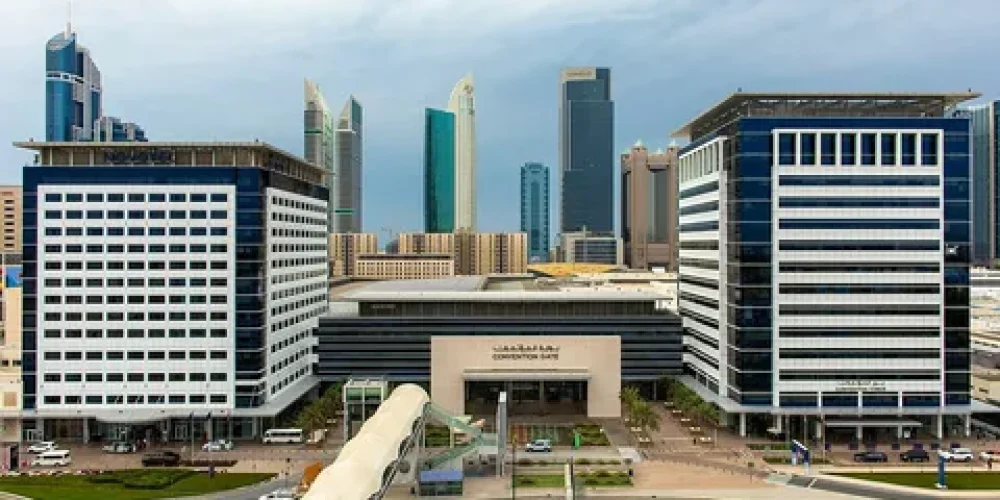
Building an exhibition stand at Dubai World Trade Centre requires more than producing a good-looking design. The critical work happens around venue requirements, access, utilities, rigging, technical planning, installation timing and final inspection. A stand can be visually complete and still face delays if power, internet, hanging structures, approvals or equipment testing have not been planned correctly.
Live Events has learned that DWTC projects work best when the venue requirements become part of the stand brief from the beginning. DWTC describes itself as the region’s largest purpose-built events complex and hosted 401 events in 2025, representing 6% year-on-year growth. That scale makes precise coordination important, particularly during major exhibition periods.
Start With The Venue Requirements
The first lesson is simple: do not design the stand in isolation from the venue.
DWTC provides dedicated systems for stand services, utilities, rigging, data and telecommunications, cleaning and other exhibitor requirements. The event organiser remains the primary contact for show-specific requirements, while the venue provides additional services through its exhibitor systems.
| Area | What needs checking | Why it matters |
|---|---|---|
| Stand location | Hall, stand number, open sides and neighbouring stands | Influences visitor flow and visibility |
| Access | Contractor access, loading arrangements and permitted working periods | Determines how materials and equipment reach the stand |
| Utilities | Power, distribution, water, waste and compressed air | Supports the physical and technical operation of the stand |
| Rigging | Hanging signs, lighting or suspended structures | Requires venue-specific planning and approval |
| Internet | Wi-Fi, wired connection and technical requirements | Important for connected demonstrations and business systems |
| Safety | Emergency routes and venue requirements | Prevents operational and compliance issues |
| Venue services | Cleaning, security, telecom and other support | Helps coordinate responsibilities before opening |
Bonus tip: Obtain the latest exhibitor manual and venue information before finalising technical drawings. Do not rely on requirements from a previous DWTC exhibition because individual events can have different organisers, schedules and procedures.
Plan Utilities Before Fabrication
Power is often treated as a final installation detail. That creates problems when the stand contains LED screens, refrigerators, computers, lighting systems, charging stations or demonstration equipment.
DWTC lists power sockets, single- and three-phase distribution boards, ceiling cables, extension bars, water, waste and compressed air among its utility services. The venue also recommends discussing requirements with the stand contractor as early as possible.
| Stand requirement | Planning question |
|---|---|
| LED screens | Where will each screen receive power and signal? |
| Lighting | How many fixtures need dedicated connections? |
| Demonstration equipment | What power load does each device require? |
| Reception | Where should charging and equipment connections sit? |
| Storage | Will equipment require hidden power inside storage? |
| Catering equipment | Does any appliance require a dedicated connection? |
| Meeting areas | Are laptops, displays or charging points required? |
The practical lesson is to create a power and equipment schedule before production, not after the stand has been installed.
Treat Rigging As A Separate Technical Project
Hanging signs, suspended lighting and overhead structures require more planning than simply adding an element to a 3D design.
DWTC states that DXB Live is the sole provider of top and primary rigging at the venue, using certified teams and approved rigging hardware. The stand contractor remains the first point of contact for coordinating the requirement.
| Rigging element | What to confirm before installation |
|---|---|
| Hanging sign | Dimensions, weight, position and approved suspension method |
| Lighting grid | Fixture quantity, weight and power requirements |
| Truss | Dimensions, load and attachment arrangement |
| Overhead branding | Artwork, visibility and approved mounting method |
| Suspended technology | Equipment weight, cabling and technical access |
Bonus tip: Never leave overhead elements until the final installation stage. Confirm their position against the stand layout, neighbouring stands, lighting plan and venue requirements before fabrication begins.
Build Around The Actual Visitor Journey
DWTC’s scale means exhibition halls can become highly active environments. The stand should therefore work when visitor traffic increases, not only when viewed as an empty 3D rendering.
DWTC reported nearly 3 million participants across its venues in 2025, reinforcing the importance of clear circulation and practical visitor handling during busy events.
A practical layout should answer four questions:
- Can visitors identify the stand from the main aisle?
- Can they enter without blocking passing traffic?
- Can staff speak with visitors without occupying the main walkway?
- Can products, demonstrations and meeting areas operate simultaneously?
Avoid placing a large reception counter directly in the natural visitor path. Keep demonstrations visible but provide enough clearance for people to stop without creating a bottleneck.
Test Technology Before The Show Opens
Technology should be tested as a complete system rather than as individual devices.
DWTC provides public Wi-Fi and dedicated connectivity options, while wired internet is also available across the venue. Connected demonstrations should therefore have a defined connectivity plan rather than relying on one connection method.
| Technology | Test before opening |
|---|---|
| LED display | Signal, resolution, brightness and content playback |
| Touchscreen | Software, touch response and network connection |
| Laptop | Presentation files, adapters, charging and updates |
| Audio | Speakers, microphone and playback |
| Internet | Login, required applications and backup connection |
| Lighting | Switching, positioning and programmed effects |
| Demonstration equipment | Full operating sequence from start to finish |
Bonus tip: Keep essential presentations, videos and product information available offline. A live internet connection should improve the experience rather than determine whether the experience works at all.
Understand The Installation Sequence
A common mistake is treating installation as one large task. Experienced stand delivery separates the work into stages.
| Installation stage | Main task |
|---|---|
| Site access | Confirm passes, access and delivery arrangements |
| Floor preparation | Mark positions and prepare the base |
| Structural build | Install walls, platforms and major architectural elements |
| Electrical work | Complete power distribution and connections |
| Graphics | Install printed and illuminated branding |
| Technology | Mount screens and connect equipment |
| Furniture | Position counters, seating and storage |
| Testing | Check lighting, AV, internet and demonstrations |
| Final inspection | Compare the finished stand against approved requirements |
DWTC’s venue information also highlights stand design and build, furniture, A/V and technical services as distinct exhibitor requirements.
What To Check Before Choosing Your Stand Approach
Not every DWTC exhibition requires the same construction method. The decision should follow the event objective and operational requirements.
| Stand approach | Works well when | Main consideration |
|---|---|---|
| Modular stand | The layout needs flexibility or future adaptation | Prioritise efficient reconfiguration |
| Custom exhibition stand | Brand presentation requires a distinctive environment | Finalise technical details early |
| Double deck stand | Additional meeting or hospitality space is required | Allow for structural and access planning |
| Pavilion solution | Multiple brands or organisations share a coordinated space | Establish clear circulation and shared facilities |
| Trade show display | Product visibility is the main objective | Keep demonstrations accessible and uncluttered |
Live Events Services For DWTC Exhibitions
Live Events handles several parts of exhibition delivery that directly connect with the practical requirements of a DWTC project:
- Creative Exhibition Stand Design: Plans visitor flow, functional areas, branding positions and technical requirements around the exhibition objective.
- Exhibition Stand Fabrication: Produces the approved structural elements, graphics, display features and supporting components.
- Exhibition Stand Installation: Coordinates on-site assembly, positioning, finishing and pre-opening checks.
- Event Technologies: Integrates display, AV and technology requirements into the exhibition environment.
Questions To Answer Before Building At DWTC
When should the DWTC requirements be reviewed?
Review the exhibitor manual and event-specific requirements before completing the final stand design. This gives the technical team time to adapt the structure and services.
Does every suspended feature require venue coordination?
Suspended and overhead elements should be checked against the venue’s current rigging requirements. DWTC identifies primary rigging as a controlled venue service.
Should internet be planned separately from the stand design?
Yes. Decide which demonstrations, systems and devices require connectivity and establish a suitable connection method before installation.
What should happen before the stand is signed off?
Complete a physical inspection covering structure, graphics, lighting, power, technology, furniture, storage, visitor pathways and safety requirements.
Lessons That Matter After The Exhibition
How can future DWTC stands be improved?
Record operational issues immediately after the event. Visitor flow, meeting-space usage, technical faults and storage requirements provide useful evidence for the next design.
What should be retained after dismantling?
Keep final drawings, artwork, technical layouts, equipment lists and installation notes. These records can reduce unnecessary redesign for future exhibitions.
How should technology performance be evaluated?
Record which devices required technical intervention, which systems performed reliably and where visitors encountered difficulty. Use those observations to refine future setups.
Can the same stand design be reused?
A reusable design can work when its components adapt to different spaces, branding requirements and exhibition objectives. Modular planning makes this easier.
What is the most useful post-show review?
Compare the planned visitor journey with what actually happened. Look at where visitors stopped, where conversations formed, which displays attracted attention and where congestion occurred.
Build For The Venue You Are Actually Using
A successful DWTC exhibition stand starts with venue knowledge and ends with a verified installation. The key lessons are consistent: check the event requirements early, plan utilities before fabrication, treat rigging separately, design around visitor movement, test technology before opening and assign clear responsibility for every operational detail.
For project-specific coordination, Live Events can be reached at contact@liveevents.ae or +971 52 840 9669. Provide the exhibition name, hall, stand size, event dates, design requirements and technical needs so the project can be assessed against the actual venue conditions.
The strongest approach is not simply to build an attractive stand. Build one that works within the venue, supports visitor behaviour and remains operational from installation through dismantling.