
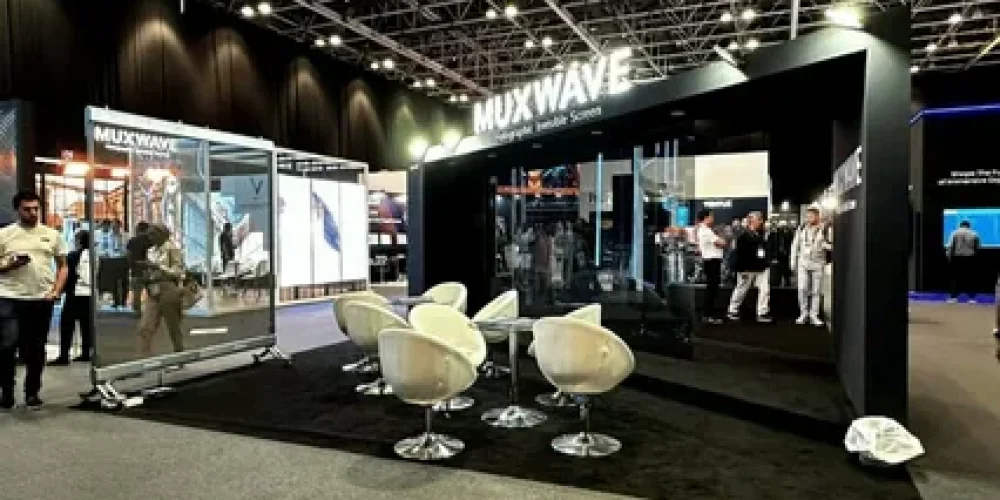
An exhibition stand in Dubai does not have one fixed cost. The final amount depends on the stand size, construction method, design complexity, materials, technology, furniture, lighting, electrical requirements, venue rules, installation, dismantling, and event duration. A basic modular stand has a very different specification from a custom-built double-deck stand with integrated LED displays and meeting areas.
The most reliable way to assess an exhibition stand budget is to separate the project into its physical build, technical requirements, venue-related services, and on-site delivery. This approach reflects how exhibition projects are planned in practice and helps prevent missing costs during the later stages of production. Dubai’s exhibition environment also operates at significant scale: Dubai World Trade Centre reported 401 events across its venues in 2025, representing 6% year-on-year growth.
What Actually Determines Exhibition Stand Cost
The stand design is only one part of the overall calculation. Two stands occupying the same floor area can require very different levels of fabrication and technical work.
| Cost factor | What affects the requirement | Practical impact |
|---|---|---|
| Stand size | Floor area, number of open sides and layout | Larger areas generally require more structure, flooring, graphics and lighting |
| Stand type | Modular, custom, pavilion or double deck | Construction method changes the materials, engineering and installation requirements |
| Design complexity | Curved structures, suspended elements, custom furniture and architectural features | More complex designs require additional fabrication and preparation |
| Branding | Printed graphics, illuminated signage, digital displays and feature walls | Branding requirements influence both production and installation |
| Technology | LED screens, touchscreens, displays, sound and interactive systems | Technology adds power, mounting and technical planning requirements |
| Furniture | Counters, chairs, tables, storage and meeting furniture | Quantity and specification affect space planning and logistics |
| Lighting | Spotlights, feature lighting, LED systems and illuminated structures | Lighting design can change the electrical and structural requirements |
| Utilities | Power, water, waste, compressed air and distribution | Requirements vary according to the equipment operating on the stand |
| Installation | Build-up period, access, venue procedures and dismantling | Tight schedules can increase coordination requirements |
| Venue requirements | Rigging, approvals, safety procedures and additional venue services | Venue-specific rules can affect the final project scope |
Dubai World Trade Centre specifically identifies utilities such as power sockets, distribution boards, ceiling cables, water, waste and compressed air as stand requirements that may need advance planning with the stand contractor.
How Different Stand Types Compare
Choosing the right construction approach should start with the purpose of the exhibition rather than appearance alone.
| Stand type | Typical characteristics | Suitable for | Main planning consideration |
|---|---|---|---|
| Modular stand | Reusable components and adaptable panels | Companies attending multiple exhibitions | Prioritise flexibility and efficient reconfiguration |
| Custom exhibition stand | Bespoke structure, graphics, furniture and features | Brands requiring a distinctive environment | Finalise design and production details early |
| Double deck stand | Two-level structure with additional usable space | Larger footprints and brands requiring meeting or hospitality areas | Structural approval, engineering and access require careful planning |
| Pavilion solution | Large coordinated space representing a group, organisation or destination | Government, industry and multi-company participation | Coordinate branding, circulation and shared facilities |
| Custom trade show display | Focused display structure for products or demonstrations | Product-led exhibitions | Balance product visibility with visitor movement |
The distinction matters because the physical footprint alone does not describe the complexity of an exhibition stand. A compact custom stand can involve more fabrication and technology than a larger but standardised modular installation.
The Technical Details That Change the Scope
A detailed brief should identify technical requirements before fabrication begins. This prevents late design changes that can affect production, venue approvals and installation.
| Technical element | Key specification to define before production |
|---|---|
| Floor system | Platform height, finish, load requirements and access points |
| Structural system | Materials, dimensions, load-bearing elements and engineering requirements |
| Electrical system | Power demand, socket positions, distribution and equipment connections |
| Lighting | Fixture type, quantity, positioning and control requirements |
| LED displays | Screen dimensions, pixel specification, mounting method and content format |
| Audio | Speaker positions, coverage requirements and control equipment |
| Rigging | Hanging signage, lighting or structures and venue approval requirements |
| Graphics | Dimensions, artwork resolution, material and installation method |
| Storage | Enclosed storage area, access and equipment capacity |
| Meeting areas | Seating capacity, privacy requirements and circulation space |
| Safety | Fire prevention, emergency access and venue compliance requirements |
Venue-specific requirements must be checked separately. DWTC states that primary rigging is handled by its designated provider and that approved hardware and health and safety practices apply.
Why Dubai Venue Requirements Matter
Exhibition planning in Dubai requires more than designing an attractive structure. Venue access, utilities, rigging, inspections, safety requirements and submission procedures can influence the production plan.
DWTC’s exhibitor information explains that the organiser remains the first point of contact for venue services and that exhibitors should consult the relevant exhibitor portal or manual.
Dubai’s exhibition sector also operates at substantial scale. DWTC reported 2.65 million visitors across its large-scale events in 2024, alongside 100 large-scale exhibitions and events. This scale makes detailed operational planning particularly important for busy exhibition periods.
Bonus tip: Do not approve fabrication from a visual concept alone. Ask for a production-ready specification covering dimensions, materials, electrical requirements, graphics, furniture, technology and installation responsibilities.
Dubai Climate and Installation Considerations
Dubai’s heat creates additional logistical considerations when materials and equipment move between outdoor loading areas, transport vehicles and climate-controlled exhibition halls.
Sensitive technology should remain protected from excessive heat and dust during transportation and storage. Printed graphics, electronic equipment and certain finishing materials also benefit from controlled handling before installation.
Indoor exhibition halls provide a controlled environment during the event, but loading, unloading and build-up activities can involve different conditions. Installation schedules should therefore account for material protection, equipment handling and adequate testing before visitors enter the hall.
Bonus tip: Schedule technology testing before the official opening rather than relying on the first morning of the exhibition. Check every screen, connection, lighting circuit and presentation system while the technical team still has access to the stand.
What to Check Before Choosing a Stand Solution
The cheapest-looking specification is not automatically the most suitable. Assess the stand against the purpose of the exhibition.
- Visitor objective: Decide whether the stand needs product displays, demonstrations, meetings, hospitality or lead collection.
- Brand requirements: Determine which brand elements must be physically built and which can use graphics or digital media.
- Reuse potential: Consider whether components can be adapted for future exhibitions.
- Technology needs: Identify screens, interactive systems, audio and lighting before finalising the structure.
- Venue rules: Confirm submission deadlines, rigging procedures, electrical requirements and access arrangements.
- Build schedule: Check when the contractor can access the hall and when dismantling must be completed.
- Operational responsibility: Establish who handles installation, testing, technical support and dismantling.
Practical Services for Exhibition Projects
Live Events provides several services directly relevant to exhibition stand planning and delivery:
- Creative Exhibition Stand Design: Develops the spatial concept, visitor flow, branding areas and functional layout before fabrication.
- Exhibition Stand Fabrication: Converts approved designs into physical structures, graphics, fixtures and display elements.
- Exhibition Stand Installation: Coordinates the build, positioning, technical setup and final preparation at the exhibition venue.
- Custom Exhibition Stands: Supports bespoke stand environments where standard modular components cannot meet the required layout or brand experience.
Common Questions Before Choosing a Stand
Should a company choose a modular or custom stand?
Choose based on the exhibition objective, required branding, technology, reuse plans and visitor experience. Modular systems prioritise flexibility, while custom construction allows greater control over the environment.
Does stand size determine the entire project scope?
No. Floor area is only one variable. Structure, technology, lighting, graphics, furniture, utilities and engineering can significantly change the specification.
When should the design be finalised?
Allow enough time for design approval, technical drawings, artwork production, venue submissions, fabrication, testing and installation. Earlier planning provides more room to resolve technical issues.
Does an LED screen require special planning?
Yes. The screen requires suitable power, mounting, viewing distance, content preparation and technical testing. Its position should also support the visitor flow rather than obstructing movement.
Questions to Consider After the Exhibition
How can an exhibition stand be reused?
Design modular components, graphics and furniture so they can be adapted to different floor plans. Reuse becomes easier when the original design avoids unnecessary permanent elements.
What should be inspected before opening?
Check structural stability, graphics, lighting, electrical connections, screens, furniture, storage, signage and visitor pathways. Complete a physical walkthrough before the exhibition opens.
How should exhibition technology be protected?
Transport equipment securely, avoid prolonged exposure to heat or dust, use appropriate mounting, and test every device before the event begins.
What documents should be retained after the event?
Keep final drawings, artwork files, electrical layouts, equipment specifications, supplier details and installation notes. These records simplify future exhibition planning.
How can future exhibition planning become more efficient?
Record what worked and what did not after each event. Note visitor movement, meeting-space usage, technology performance, storage requirements and installation issues. Use those observations when preparing the next stand brief.
Make the Exhibition Stand Decision on Requirements
An exhibition stand should be evaluated as a complete production project rather than as a structure alone. Size, construction method, design, technology, utilities, venue requirements and installation all influence the final scope.
For a project-specific discussion, Live Events can be reached at contact@liveevents.ae or +971 52 840 9669. Before requesting a proposal, prepare the exhibition name, venue, stand dimensions, objectives, preferred stand type, branding requirements and technology needs. A clear brief makes it easier to compare specifications accurately and identify what the project actually requires.
Evaluate the stand against the exhibition’s objectives, operational requirements and future reuse plans before selecting the final solution.