
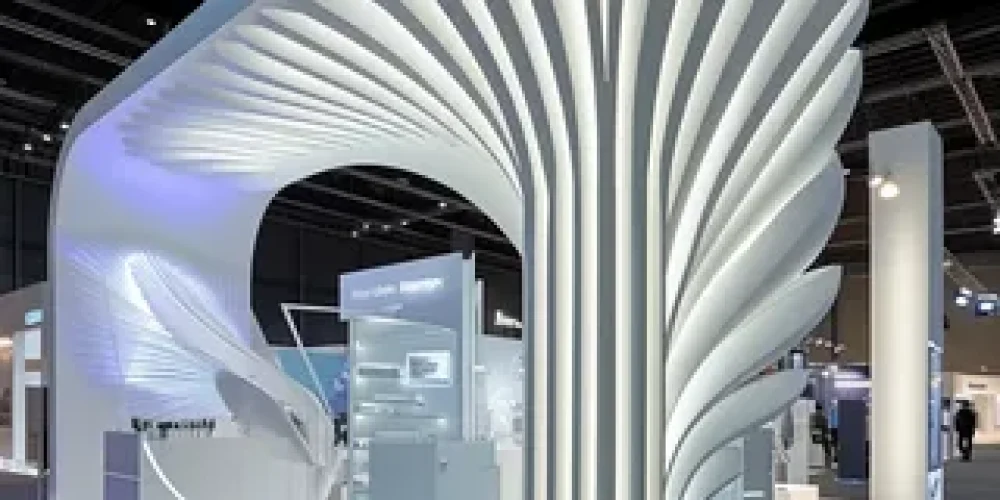
An exhibition stand attracts attention when visitors can understand its purpose quickly, see something relevant to their needs and enter without feeling crowded. Strong exhibition stand design combines clear branding, visible product displays, useful demonstrations, comfortable meeting areas and an easy visitor journey. Decorative features alone rarely provide the same value as a design that gives people a reason to stop and engage.
For exhibitions in Dubai, stand planning must also account for busy aisles, venue regulations, technical requirements and diverse international audiences. Dubai World Trade Centre hosted 401 events and welcomed 2.97 million attendees across its venues in 2025, highlighting the scale of the exhibition environment. Source: Dubai World Trade Centre. The following 12 exhibition stand ideas focus on practical ways to improve visibility, visitor engagement and the overall experience.
12 Exhibition Stand Design Ideas That Encourage Visitors to Stop
1. Create a Strong Visual Focal Point
Give visitors one clear element to notice from across the exhibition hall. A distinctive overhead sign, large product display, illuminated logo or architectural feature can help people recognise the stand without competing messages.
Practical tip: Keep the main message short and position it where visitors can see it from the main approach aisle.
2. Use Interactive Product Demonstrations
Let visitors see how a product or service works instead of relying entirely on printed explanations. Live demonstrations, working prototypes and guided product trials give people a practical reason to spend time at the stand.
Plan demonstrations around short, repeatable sessions so visitors can join without waiting too long.
3. Add LED Screens With Purpose
LED displays can communicate product features, project results, animations and short brand stories. Their value depends on the relevance and readability of the content rather than screen size alone.
Use high-contrast visuals, concise text and captions that communicate the message without requiring audio.
4. Design an Open and Welcoming Layout
Open corners, clear entrances and visible product zones make a stand easier to approach. Visitors may hesitate when counters, furniture or tall walls create the impression that entry requires permission.
Keep reception desks away from the main entrance and provide enough room for people to pause without blocking the aisle.
5. Build a Dedicated Product Showcase
Give important products enough space to be examined individually. Use focused lighting, clear labels and a logical arrangement to help visitors compare features without searching through a crowded display.
For products that require close inspection, include suitable demonstration surfaces and secure storage for additional samples.
6. Introduce Immersive Brand Environments
Use coordinated lighting, graphics, materials and sound to create a setting that reflects the brand’s identity. An immersive environment works best when each element supports the same message rather than competing for attention.
For example, a technology company might use interactive visual walls, while a sustainable materials exhibitor could showcase physical samples and material textures.
7. Include Comfortable Meeting Areas
Provide a practical space for conversations that need more time or privacy. Seating, suitable table heights and thoughtful positioning help sales teams discuss technical requirements without competing with demonstrations nearby.
Separate quieter meeting areas from high-traffic zones, especially when visitors need to review documents or discuss confidential business matters.
8. Use Lighting to Guide Attention
Combine general illumination with focused lighting for products, graphics and architectural features. Different lighting zones help visitors understand where to look first and distinguish important displays from background elements.
Avoid glare on screens, reflections on glossy surfaces and lighting that makes printed information difficult to read.
9. Add Touchscreens and Digital Exploration
Interactive screens can help visitors browse product specifications, compare options, explore portfolios or complete simple enquiries. They are especially useful when the full product range cannot fit physically on the stand.
Keep navigation intuitive and limit the number of steps needed to reach important information.
10. Make Branding Visible From Multiple Directions
Exhibition visitors approach from different aisles, so branding should not depend on one viewing angle. Position logos, signage and key messages where the floor plan allows visibility from the principal approach routes.
Use consistent colours, typography and imagery across physical graphics and digital displays to make the stand recognisable.
11. Create a Useful Hospitality or Networking Zone
A small, well-organised hospitality area can encourage relevant conversations and provide a place for scheduled meetings. The design should support the event’s audience rather than add furniture that reduces usable display space.
Check venue policies before planning refreshments, food service or equipment that requires additional utilities.
12. Integrate Sustainable and Reusable Elements
Reusable modular components, durable graphics systems and adaptable furniture can support future exhibitions while reducing unnecessary material waste. Choose elements that can be repaired, updated or reconfigured for different stand layouts.
Prioritise practical reuse over sustainability claims that cannot be verified.
Choose Stand Features Based on Your Exhibition Goals
Different design approaches serve different visitor needs. Select features according to the product, audience, available space and intended interaction.
| Design approach | Best suited for | Main advantage | Key consideration |
|---|---|---|---|
| Open-plan stand | Broad visitor engagement | Easy entry and visibility | Needs clear zoning |
| Product showcase | Physical products and equipment | Supports direct inspection | Requires safe display and storage |
| LED feature wall | Brand storytelling and visual content | Communicates messages from a distance | Requires content and power planning |
| Interactive technology | Complex products and digital services | Encourages active exploration | Needs testing and backup content |
| Meeting-focused layout | Business-to-business discussions | Supports longer conversations | Must preserve visitor circulation |
| Immersive environment | Experience-led brands | Creates a consistent brand setting | Every feature should support the core message |
| Modular design | Repeat exhibitors | Allows reconfiguration and reuse | Layout flexibility depends on the chosen system |
Technical Details to Resolve Before Design Approval
Creative concepts must work within the physical and technical conditions of the exhibition venue. Confirm these details before finalising drawings or beginning fabrication.
| Technical requirement | What to confirm |
|---|---|
| Stand dimensions | Allocated floor area, height limits and open sides |
| Structural design | Materials, stability, load requirements and engineering approvals |
| Electrical supply | Equipment demand, socket locations and distribution |
| LED displays | Screen dimensions, resolution, mounting and content format |
| Lighting | Fixture positions, glare control and electrical connections |
| Rigging | Permitted hanging points, loads and venue approval |
| Visitor circulation | Clear entrances, accessible routes and unobstructed exits |
| Digital connectivity | Internet requirements and offline alternatives |
| Graphics | Final artwork, dimensions, readability and installation method |
Venue rules differ, so exhibitors should consult the relevant event manual and approved contractor requirements. For example, DWTC’s exhibitor guidance covers venue services and technical arrangements that may affect stand design.
Adapt Exhibition Stand Design to Dubai
Dubai exhibitions often bring together local businesses and international visitors. Use clear English messaging, supported by simple diagrams or demonstrations when products involve technical concepts. Add other languages when audience research shows a practical need.
Heat and dust also matter during transport, loading and installation. Protect sensitive screens, electronics, printed graphics and finishing materials during handling. Plan installation around venue access times and complete equipment testing before the hall opens.
A useful industry signal comes from UFI’s Global Exhibition Barometer. Its January 2026 findings reported that 58% of surveyed participants believed the need to improve exhibition formats depended on the type of event. This supports a practical principle: design choices should match the audience and event purpose rather than follow a single trend. Source: UFI industry findings.
What to Consider Before Choosing a Stand Concept
Before committing to a design, answer these questions:
- Audience: Which visitors matter most, and what information or experience do they need?
- Primary objective: Is the stand intended to demonstrate products, generate qualified enquiries, hold meetings or build brand awareness?
- Available space: Can the planned displays, storage and furniture fit without obstructing movement?
- Content: Can visitors understand the main message within a few seconds?
- Technical delivery: Are power, screens, internet, lighting and approvals feasible at the venue?
- Reuse: Can key components serve future exhibitions?
- Measurement: How will the team track meaningful engagement, such as qualified leads, demonstration attendance or booked meetings?
Practical tip: Test the proposed layout with a simple floor plan before fabrication. Mark the entrance, counters, product displays and meeting areas, then trace how visitors and staff will move through the space.
Exhibition Design Services From Live Events
Live Events provides relevant services for planning and delivering exhibition environments:
- Creative Exhibition Stand Design: Plans the visual concept, layout, visitor flow and placement of key brand elements.
- Custom Exhibition Stands: Supports bespoke structures and layouts tailored to the exhibition objective.
- Exhibition Stand Fabrication: Translates approved drawings into physical structures, graphics and display features.
- Exhibition Stand Installation: Coordinates on-site assembly and preparation in line with the approved design and venue requirements.
Common Questions Before Selecting a Stand Design
Which design idea should a small exhibition stand use?
Prioritise an open entrance, one clear visual focal point, a focused product display and simple branding. Avoid filling limited space with features that do not support the main objective.
Are interactive features suitable for every industry?
No. Use them when they help visitors understand, test or compare an offering. A well-designed physical demonstration may be more effective than a touchscreen that adds unnecessary steps.
How can a stand attract visitors without loud audio?
Use visible demonstrations, clear signage, distinctive lighting, product interaction and concise screen content. These approaches can attract attention without disturbing neighbouring exhibitors.
How can exhibition engagement be measured?
Track qualified conversations, completed demonstrations, relevant enquiries and follow-up meetings. Agree on the definitions before the event so staff record results consistently.
Keep the Design Focused on Visitor Value
The strongest exhibition stand ideas connect appearance with a clear purpose. A visible focal point earns attention, an open layout encourages entry, and relevant demonstrations or meeting areas give visitors a reason to stay.
For exhibition design and delivery enquiries, contact Live Events at contact@liveevents.ae or +971 52 840 9669. Prepare the event name, venue, stand dimensions, audience profile and primary objective before discussing the project.